About Me
About Me
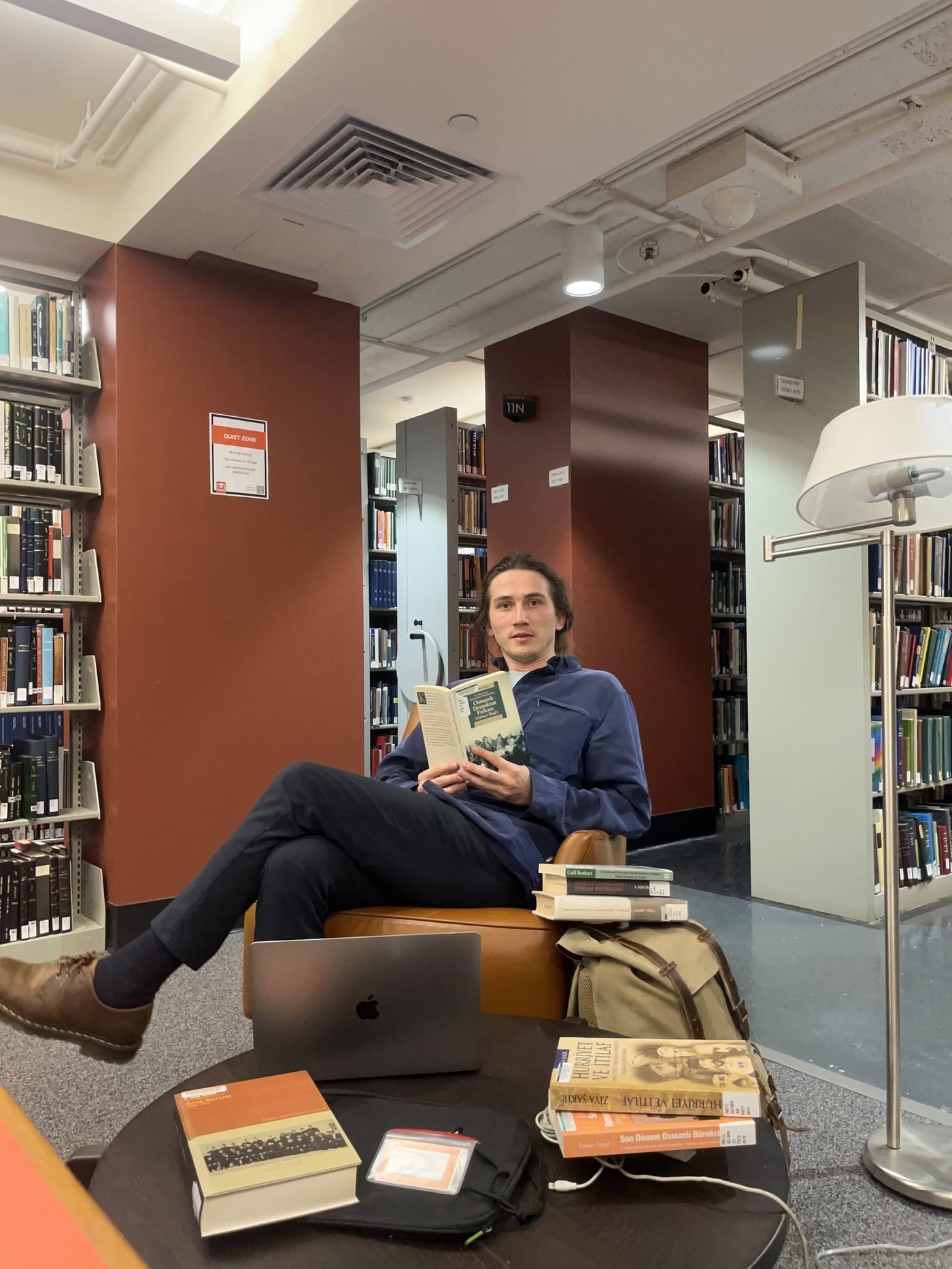
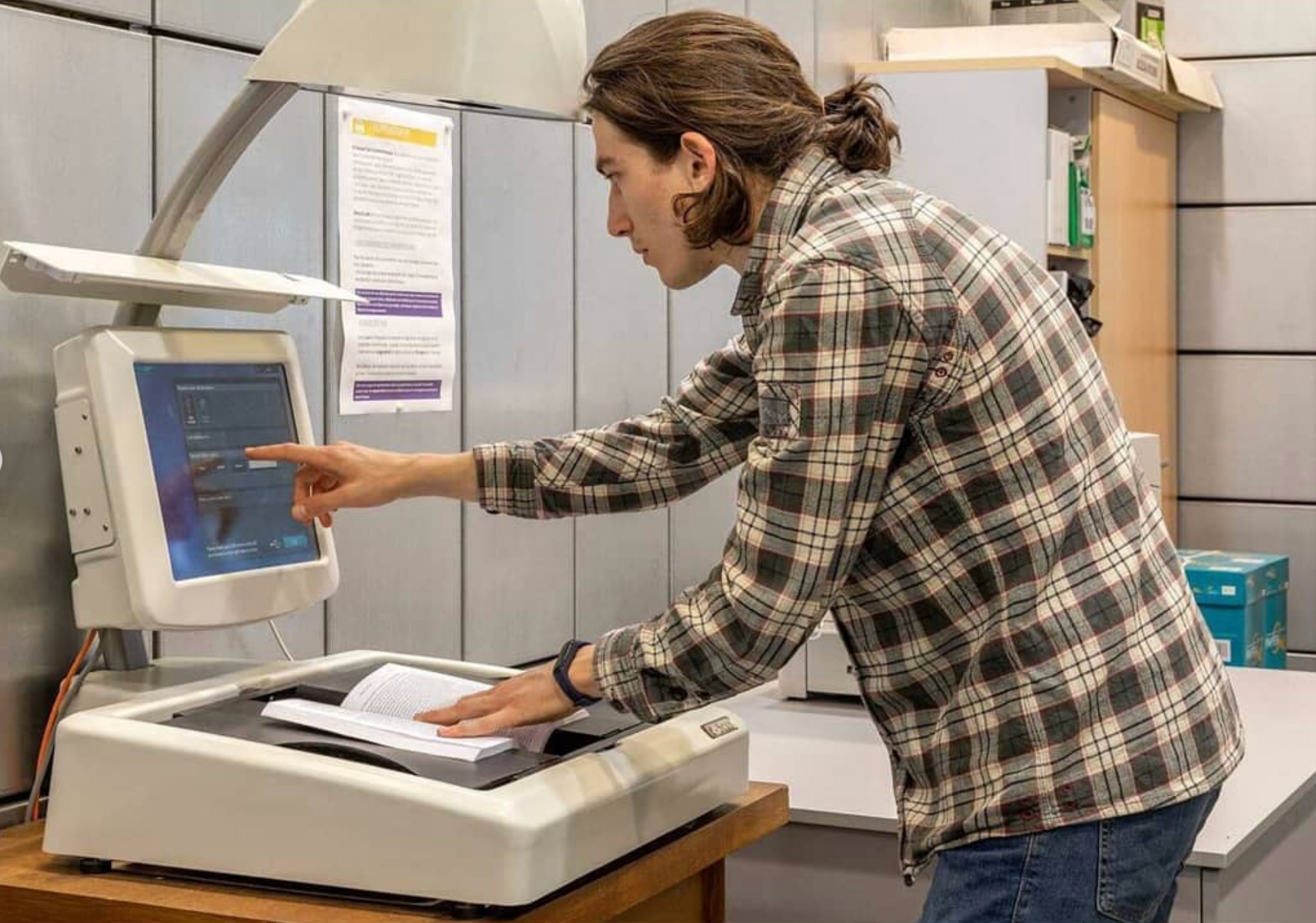
I am a PhD candidate in History and Middle Eastern and North African Studies at the University of Arizona. My work focuses on late Ottoman intellectual history, historical writing, journalism, biography, and public life. I am especially interested in how intellectuals, teachers, historians, journalists, and political actors made sense of the transformations of the modern era, not only through abstract ideas, but through institutions, texts, social networks, migration, and lived experience.
My current dissertation examines the making of Ottoman public intellectual life through Mehmed Murad Bey, a Dagestani émigré who became a historian, journalist, novelist, teacher of history, bureaucrat, memoirist, and public figure. I do not approach Murad simply as the subject of a life story. I use biography as a historical method. His life allows me to ask how intellectual authority was formed, how writing made the Ottoman world legible to readers, and how proximity to power created both opportunity and risk.
The dissertation is organized around three connected problems: formation, worldmaking, and political existence. The first part reconstructs the conditions that made Murad possible, especially his formation between a highland Muslim society in Dagestan, Russian imperial schooling, and early Ottoman Istanbul. The second part, which is the center of my current work, studies how Murad turned from being formed by worlds to making worlds in writing through history, literature, and journalism. The third part follows the political consequences of this position, tracing how advisory intimacy and critical distance could belong to the same intellectual life.
My academic path began in Istanbul. I studied History at Boğaziçi University, where I was trained in a broad humanities environment that encouraged movement across history, literature, political thought, social science, and theory. My undergraduate project examined the Ottoman Qajar borderland in the nineteenth century, focusing on sovereignty, centralization, and frontier relations.
That early work introduced me to questions that still shape my research: how imperial authority is made, how borders are negotiated, and how political centers relate to mobile, multilingual, and contested spaces.
During my undergraduate years, I also studied political science at Sciences Po in Paris. That experience widened my intellectual formation beyond history narrowly defined. It introduced me to political science, international relations, and comparative approaches to political life. Paris later became central to my graduate training. At the École pratique des hautes études, I completed an MA in Islamology and Muslim worlds, with a thesis titled Individuation et politisation : Portrait d’un intellectuel ottoman en tant que journaliste [Individuation and Politicization: Portrait of an Ottoman Intellectual as Journalist]. In that thesis, I began working seriously on Mehmed Murad Bey, focusing on his formation, migration, entry into Ottoman society, and early journalistic career.
My training in Paris gave me a strong attachment to archival work, philology, and close reading. It also taught me to think of sources not as inert evidence, but as historical worlds in themselves. Newspapers, memoirs, bureaucratic documents, literary texts, and historical works all carry traces of the conditions in which they were produced. This approach continues to shape my work. I read Ottoman intellectuals not as isolated authors, but as people writing from within institutions, anxieties, ambitions, obligations, friendships, rivalries, and political constraints.
My relationship to archives and libraries during these years was also professional as well as scholarly. At the Bibliothèque Ulm-Jourdan of the École normale supérieure, I worked with library and archival collections as an archivist and librarian. This experience gave me a practical understanding of how collections are organized, preserved, catalogued, and made accessible, and deepened my awareness of the institutional labor that makes historical research possible. During this period, I also received training in digital humanities at the École nationale des chartes, including geographic information systems and digital approaches to historical materials.
At the University of Arizona, my doctoral work expanded this project into a broader study of Ottoman intellectual life. I bring together intellectual history, biography, global microhistory, historiography, historical sociology, and transimperial history. I work with sources in Ottoman Turkish, Turkish, French, Arabic, Russian, and English. I am interested in how ideas moved through people, but also in how people moved through institutions, languages, genres, and political settings.
Teaching is a central part of my academic identity. At the University of Arizona, I have taught courses on Political Islam, Middle Eastern ethnic and religious minorities, and Islam, and I have worked in courses on Middle Eastern humanities, Islamic civilization, modern Middle Eastern history, politics, and the Roman Empire. Before beginning my doctoral studies in the United States, I taught world history, human geography, and continental philosophy in Istanbul to students preparing for Turkey’s competitive university entrance exams.
In the classroom, I emphasize historical thinking as a practice of contextual judgment rather than memorization. I ask students to read political texts, memoirs, visual materials, maps, and archival documents as situated interventions, and I design assignments that move them from close reading to broader historical explanation. In courses on political Islam, empire, nationalism, violence, and modern Middle Eastern history, I try to create a space where students can engage sensitive subjects with precision, care, and intellectual seriousness.
My pedagogical training has been strengthened by the Graduate Certificate in College Teaching at the University of Arizona. Through coursework in Learner Centered Teaching, Technology in Teaching, Teaching as Research, and College Teaching Practice, I developed a more systematic approach to course design, assessment, classroom participation, and student centered pedagogy. In my courses, I use primary sources, media analysis, maps, visual materials, structured discussion, and digital assignments to help students connect historical inquiry with contemporary public debates.
Beyond research and teaching, I have been involved in academic service and public engagement. At the University of Arizona, I served as co-head of the Graduate Student Association, helped reactivate graduate student programming, represented students in departmental settings, and contributed to academic community building. I also worked as an Outreach Scholar with the Center for Middle Eastern Studies, where I participated in educational initiatives aimed at making the histories, cultures, and politics of the Middle East more accessible beyond the university classroom.
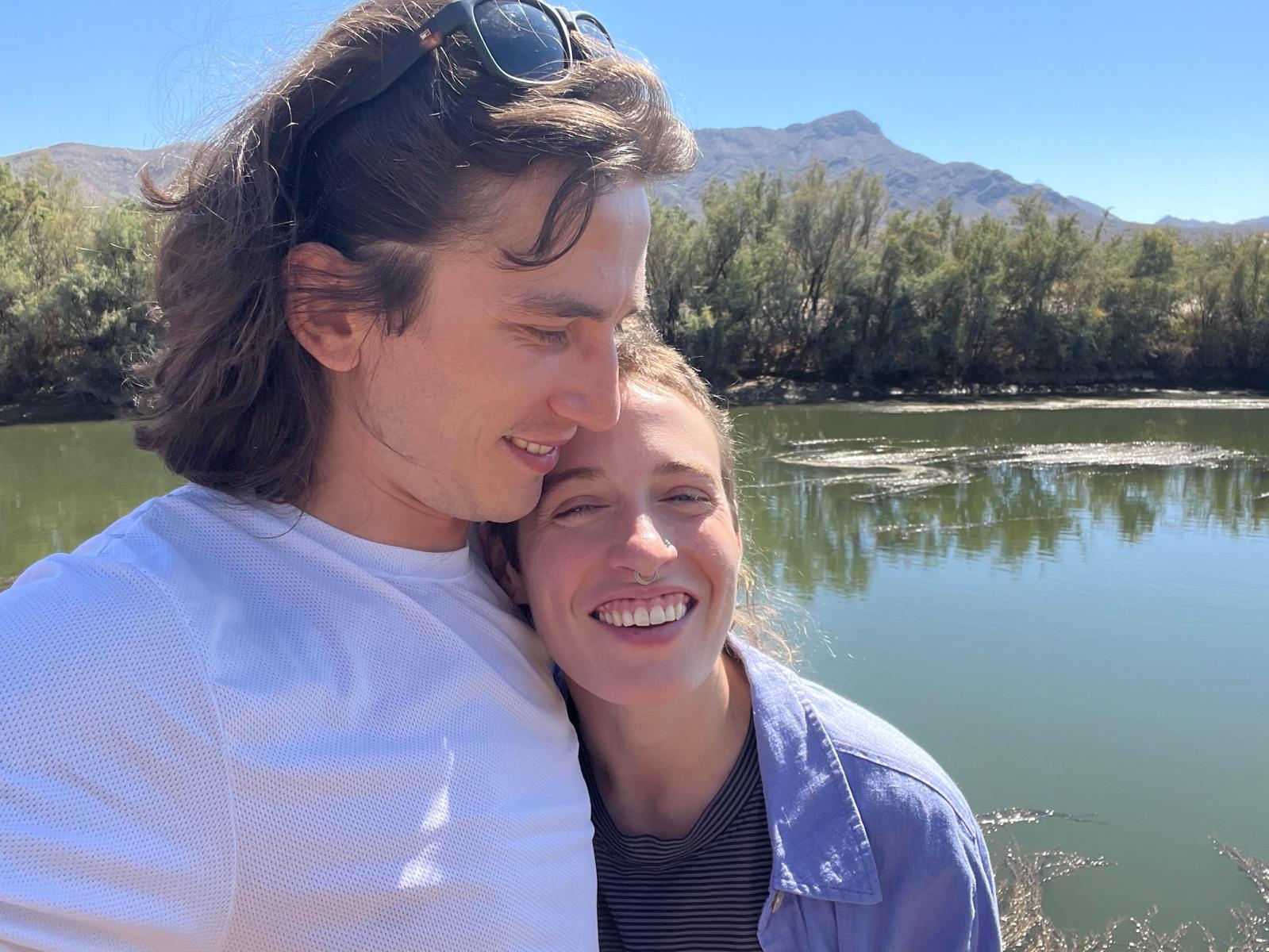
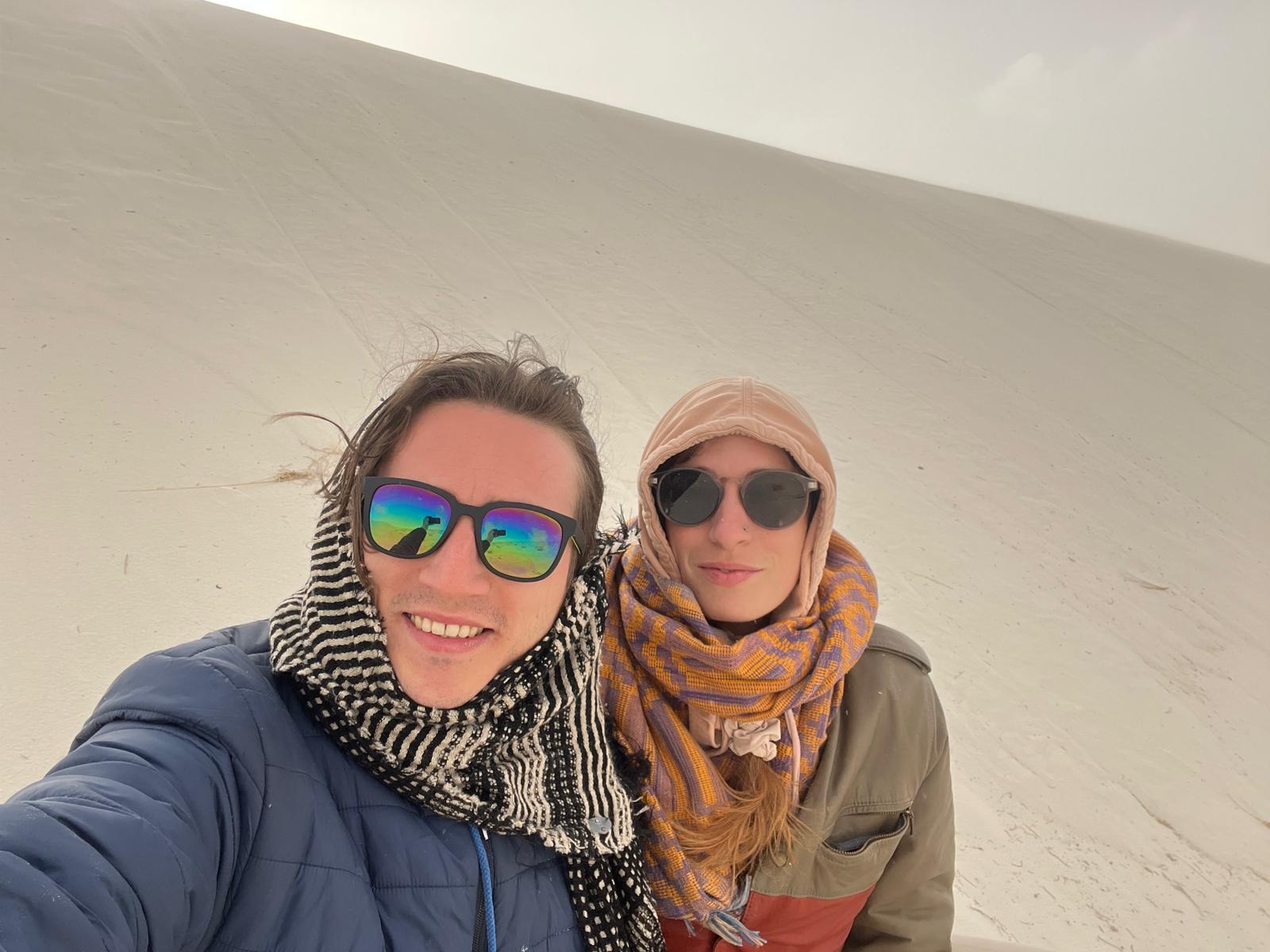
That same interest in how people inhabit and make sense of worlds also shapes the parts of my life that extend beyond academic work. My exploration of Arizona's nature became part of how I think and live. Outdoor life have given me another way to understand movement, attention, difficulty, and scale. They remind me that thinking also depends on place, body, rhythm, and the worlds we move through.
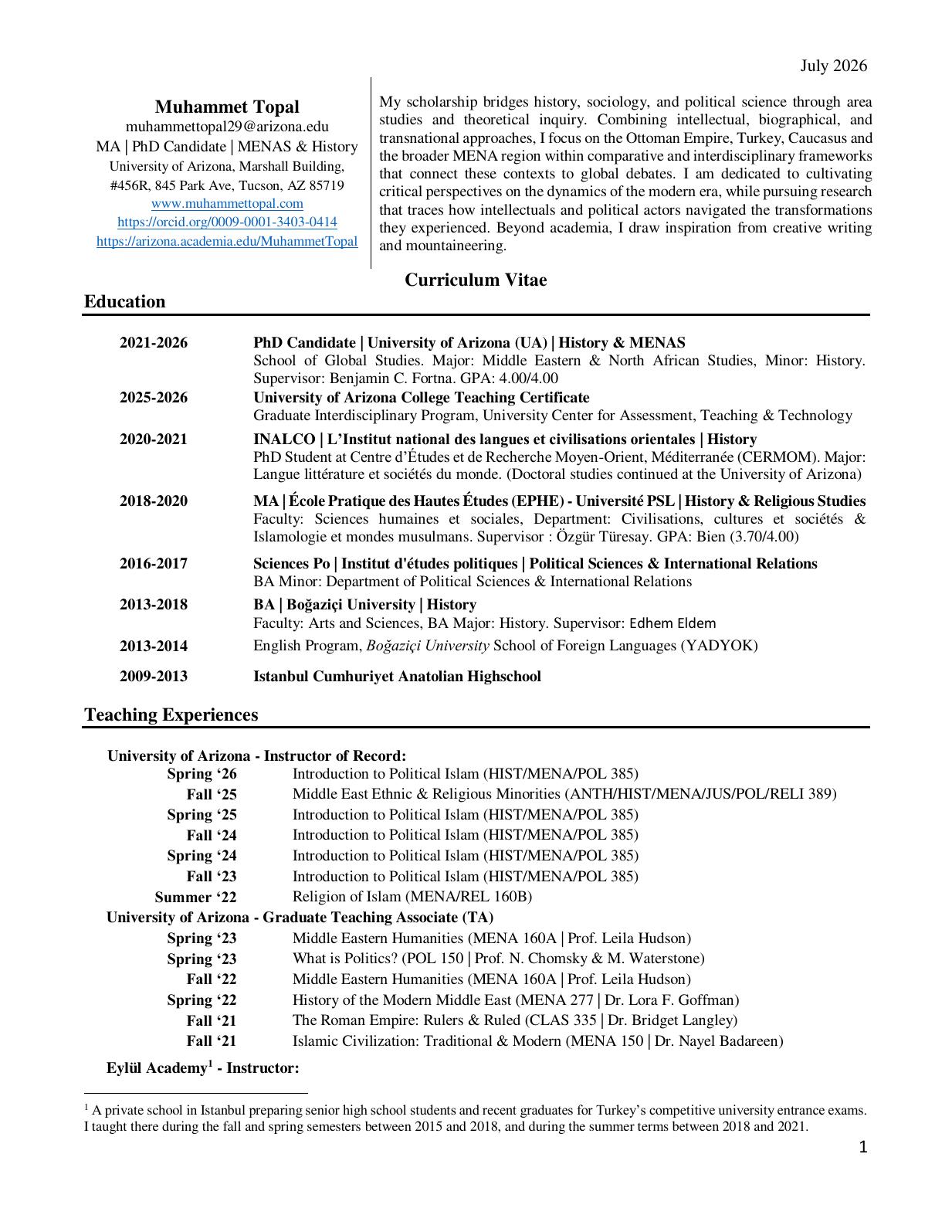
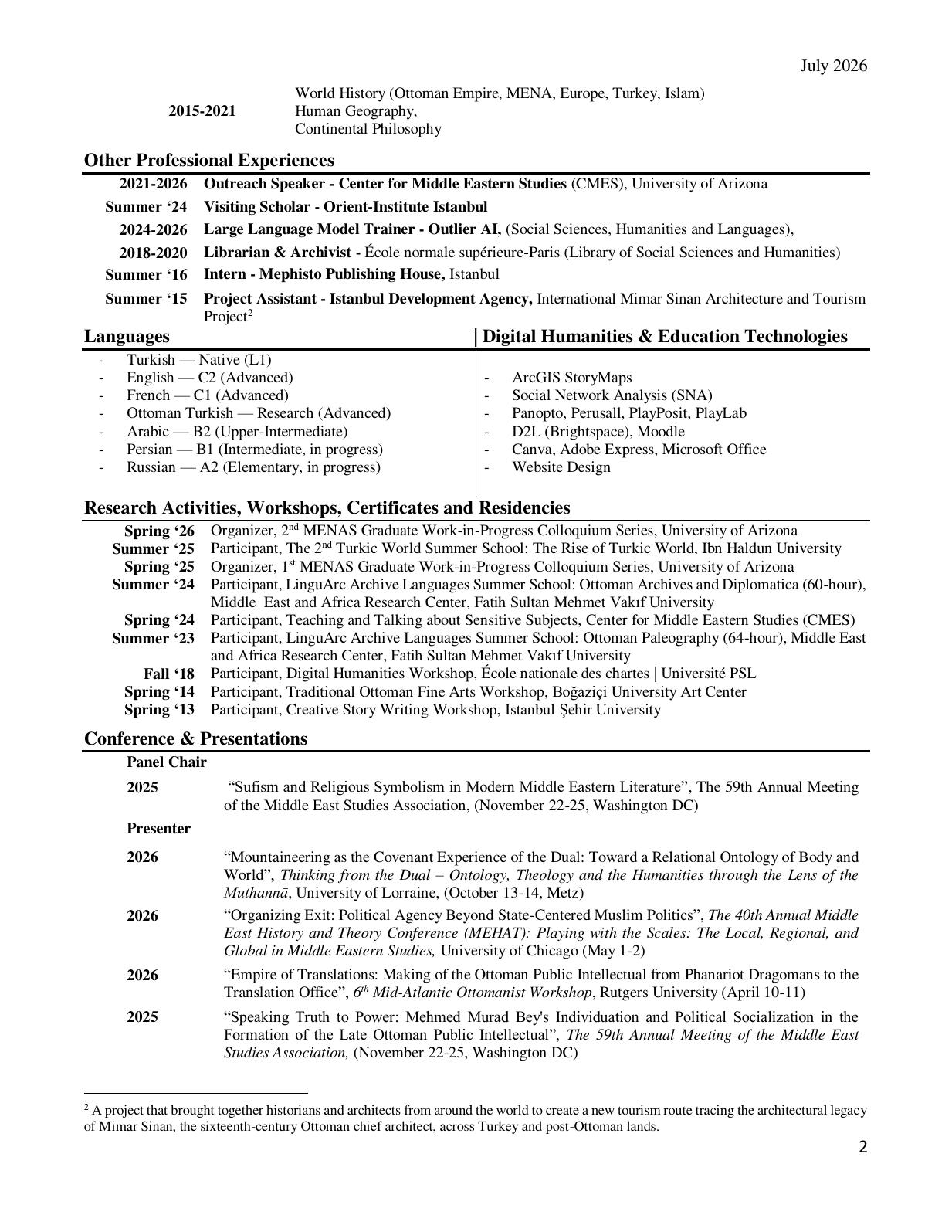
CV
Curriculum Vitae
Diversions
Beyond Academia
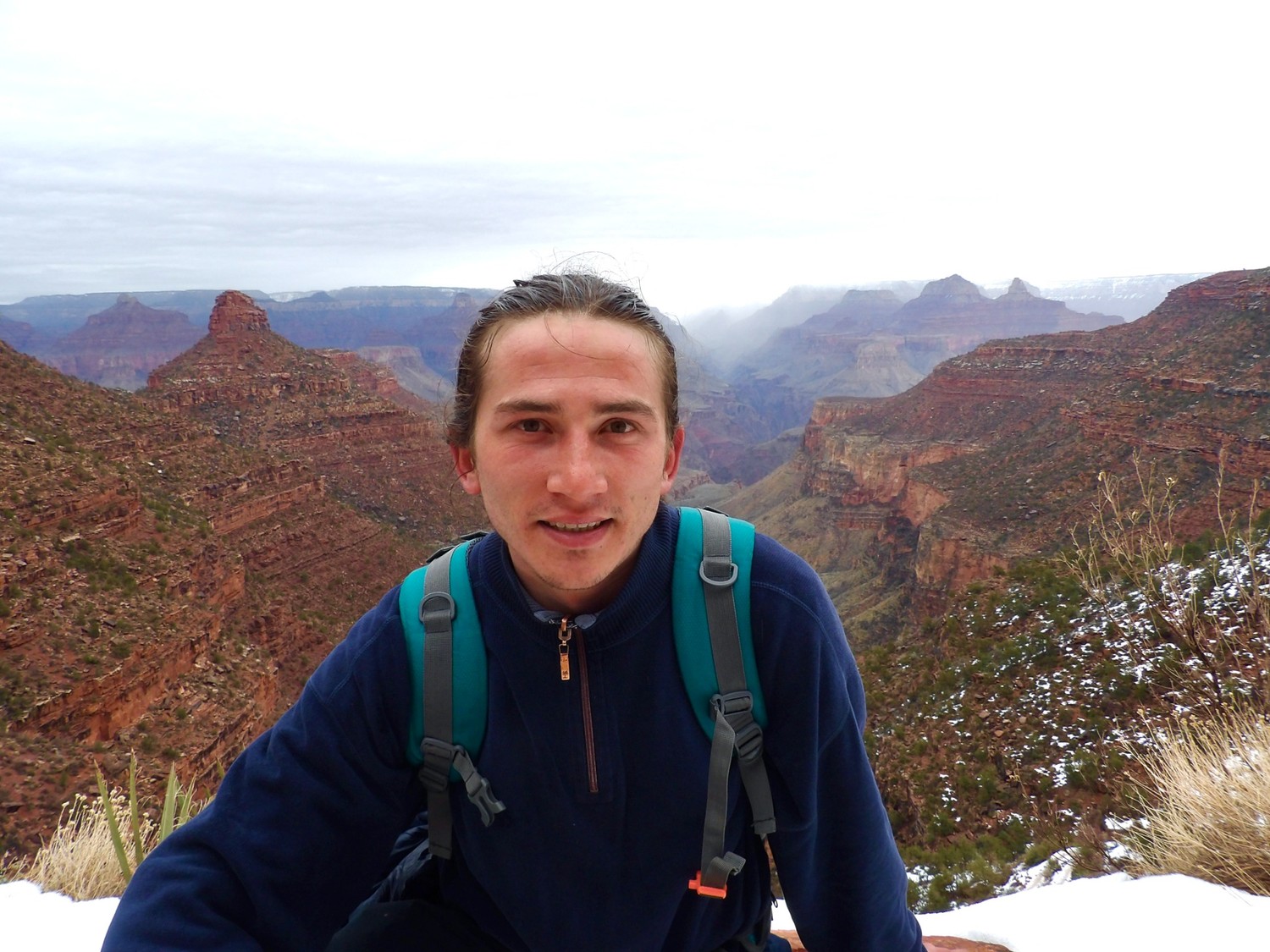
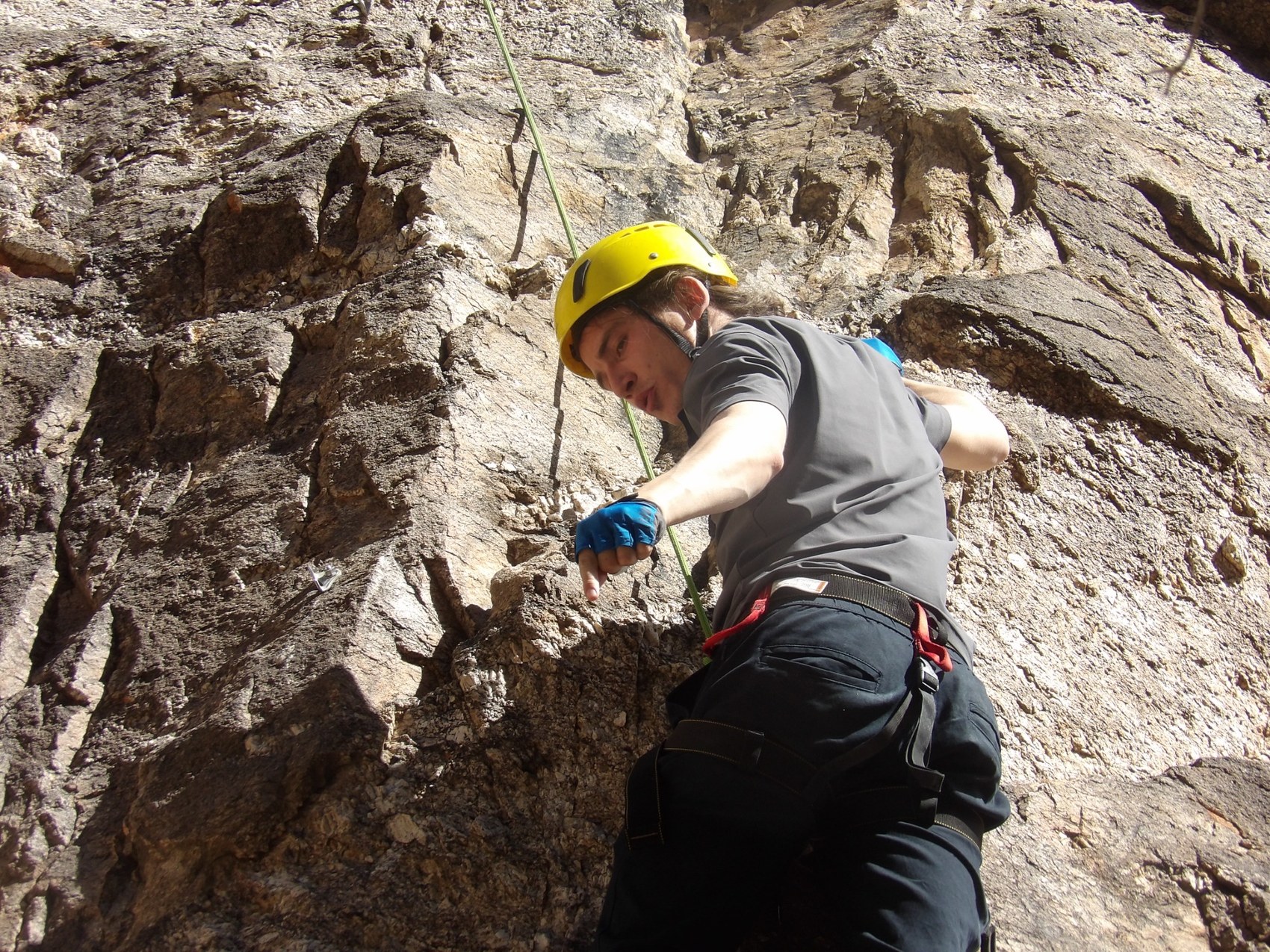
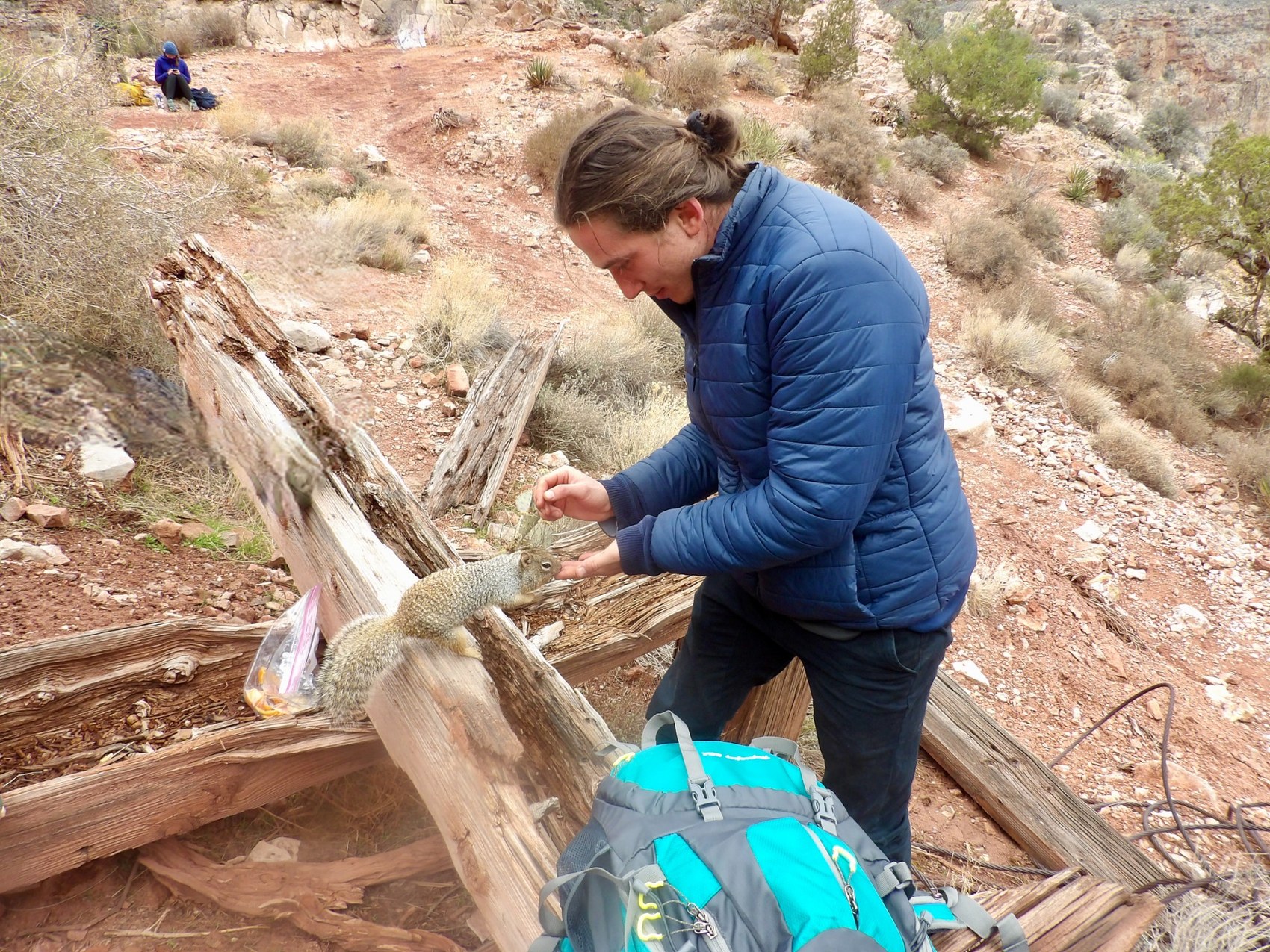
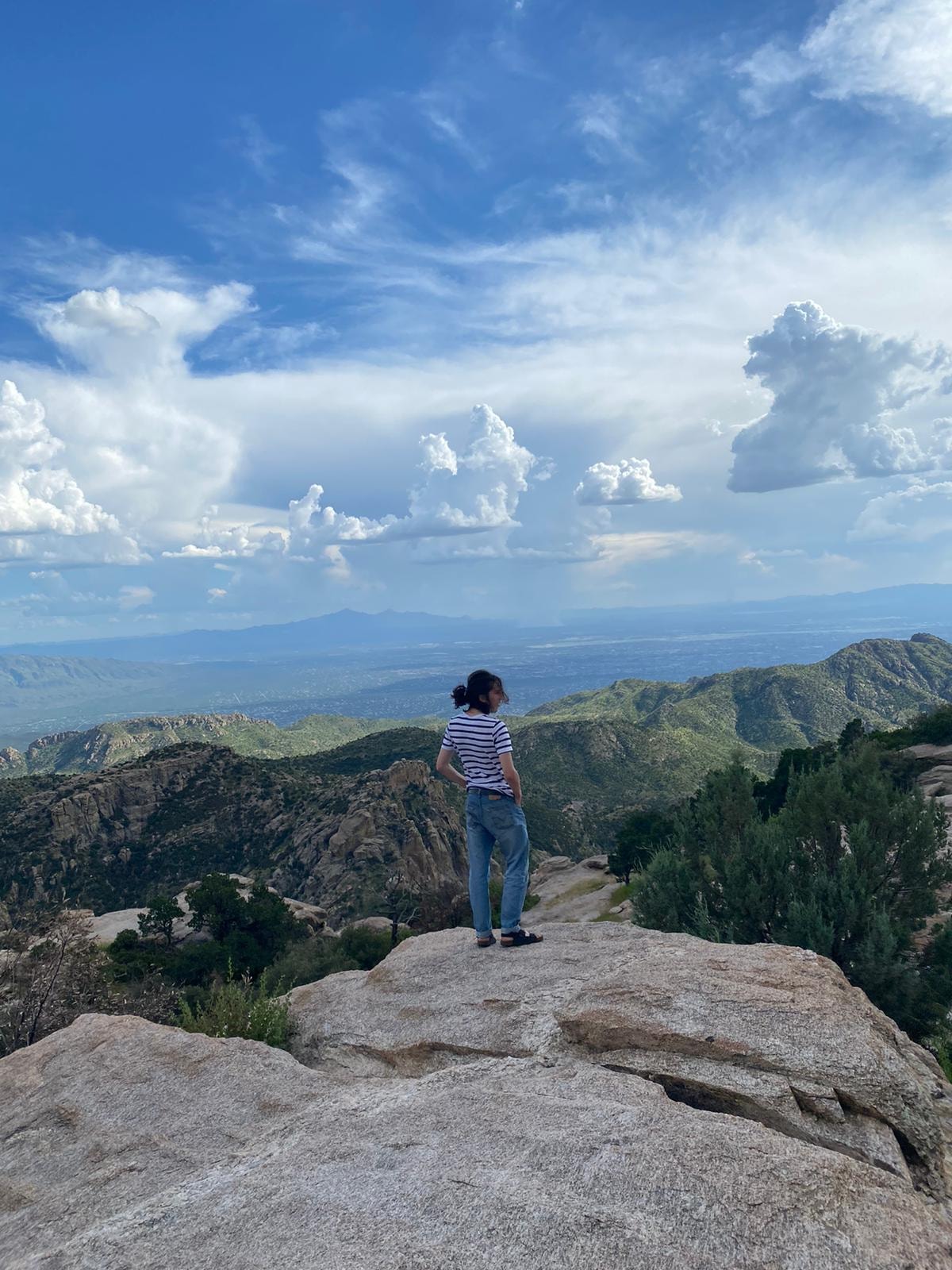
Moving from Istanbul and Paris to Arizona changed my sense of landscape. Coming from dense urban worlds into the desert, mountains, canyons, and open horizons of the American Southwest made hiking, climbing, and outdoor life part of how I think and live.
Besides mountaineering, I enjoy creative writing and thinking through literature. I am especially drawn to Italo Calvino and Oğuz Atay as both turn narrative into a way of testing reality: Calvino through form, lightness, and speculative imagination, Atay through irony, fragmentation, self-consciousness, and the failures of modern intellectual life. Their work matters to me not as an escape from history or academia in general, but as another way of asking how people inhabit language, memory, and the worlds they fail or try to build.
For more, see My Blog.