
Research
Dissertation
In my doctoral project, I study how intellectual authority, public life, and political judgment were made in the long nineteenth century. My work challenges two common ways of reading Ottoman intellectuals. The first reduces them to political labels: loyalist, oppositionist, conservative, liberal, Young Turk, Islamist, Ottomanist. The second treats them mainly as transmitters of European ideas, as if Ottoman intellectual life were a delayed version of European modernity. Against these approaches, I ask how Ottoman intellectuals actually lived, worked, wrote, taught, advised, criticized, and moved through the institutions that made their authority possible.
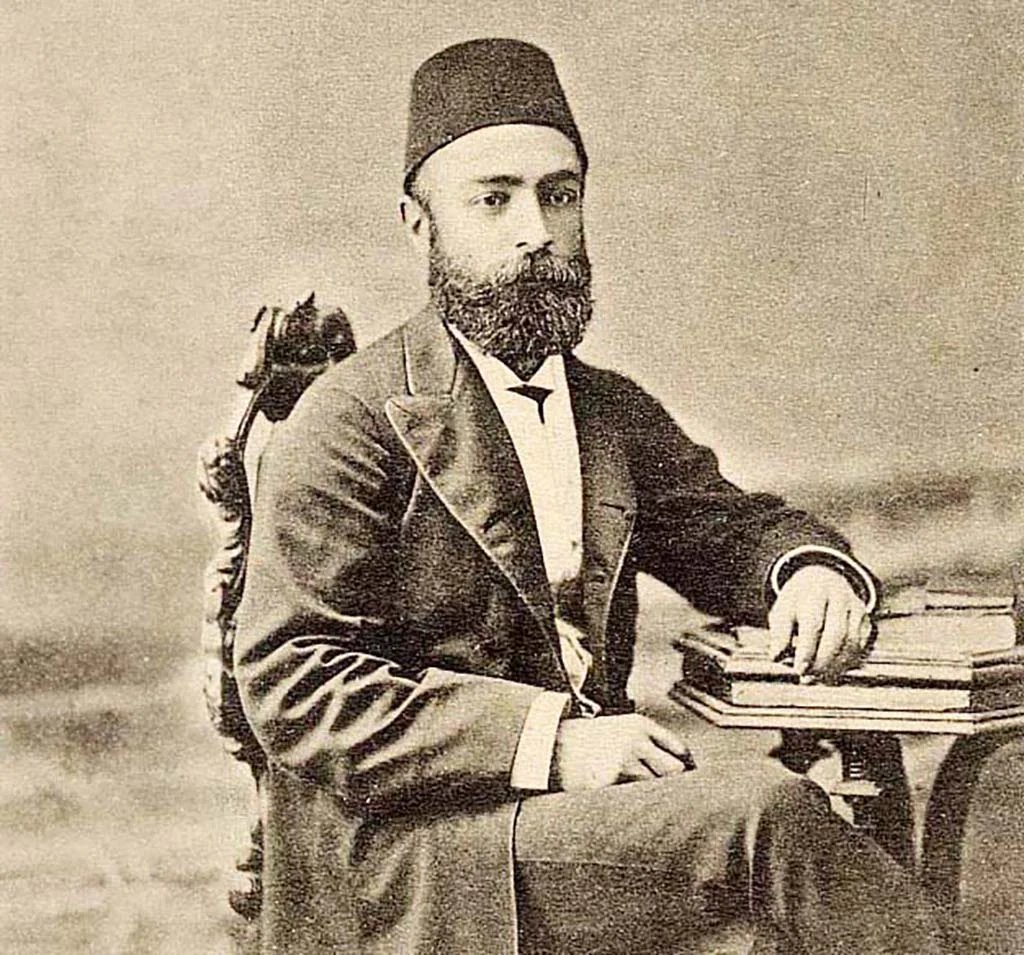
My dissertation examines this problem through the life and writings of Mizancı Mehmed Murad Bey (1854 to 1917), a Dagestani émigré who became one of the most paradigmatic intellectual figures of the late Ottoman world. Mehmed Murad was not only a reformist or political actor. He was also a historian and professor at Mülkiye, novelist and playwright, journalist and public moralist, bureaucrat and opponent. This multiplicity in his occupations, along with his life trajectory, allows me to study the Ottoman intellectual not as a fixed social type, but as a figure formed in a series of tensions: between center and periphery, migration and belonging, reform and tradition, the public intellectual and the state servant, and, finally, loyalty and dissent.
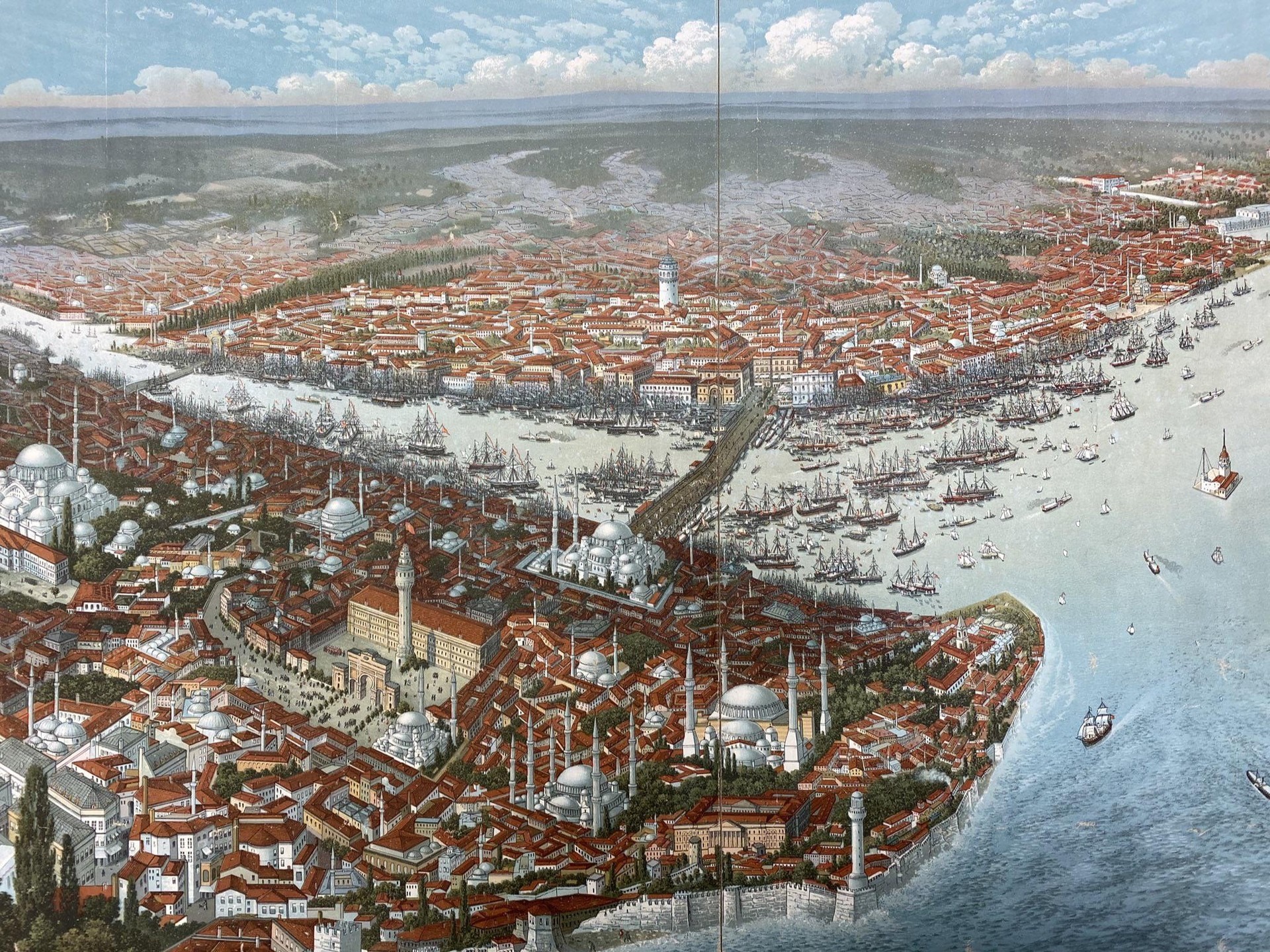
In my dissertation, The Making of an Ottoman Public Intellectual: Mehmed Murad Bey between Loyalty and Dissent, I treat life-writing not as an end in itself but as a method, drawing on global microhistory, intellectual history, and biography to grasp the spirit of the long nineteenth century through the entangled histories, geographies, circles, and ideas that Mehmed Murad traversed. I use his life to ask how a late Ottoman public intellectual became possible, how he made sense of the Ottoman Empire and the world surrounding it through literary, scholarly, and political engagement, and how proximity and distance to power eventually turned intellectual labor into political risk.
The project is organized around three movements: formation, worldmaking, and political existence. In the first part, Formation, I reconstruct the conditions that made Mehmed Murad possible in two chapters. I begin with Dagestan after the Caucasian War and with his early education in the Russian imperial school system. This part asks how a Muslim child from a highland society under Russian rule acquired the linguistic, institutional, and intellectual resources that later allowed him to enter the Ottoman center. I describe this process through the concept of peripheral centrality: the paradox by which marginal positions can generate forms of knowledge, mobility, and flexibility that become valuable at the center. The point is not to romanticize marginality. Murad’s peripheral formation gave him resources, but it also produced fragility. He could enter the Ottoman world with unusual speed as an imperial subject, but he never fully escaped the vulnerability of being both inside and outside.
The second part, Worldmaking, is the center of my current work. Here I study the moment when Mehmed Murad turns from being formed by worlds to forming worlds in writing. I examine three genres in three chapters: history, literature, and journalism. In his historical works, he ordered the Ottoman past and placed the empire within universal history. In his fiction, translations, and literary criticism, he imagined social types and moral possibilities for Ottoman modernity. In his journalism, above all in Mizan, he turned public writing into a practice of judgment, teaching readers to recognize disorder, responsibility, reform, and political failure. These genres were not separate activities. They were three modes of the same intellectual labor: making the Ottoman world legible to himself and to his readers, who were living through the crises and transformations of their time.
In the third part, Political Existence, I follow what this way of working cost him, in two chapters. Mehmed Murad's authority was shaped by his proximity to power. He could teach because he had entered state institutions, advise because he had access to political elites, and publish because he understood the language of reform from within the Ottoman bureaucratic world. But the same proximity that gave him authority made criticism, and the distance it required, dangerous. This part follows his movement from advice to estrangement, from journalism to exile, from Young Turk leadership to return, and finally to marginalization in the post-Hamidian era. The central question is not whether Mehmed Murad was conservative or progressive. It is how late Ottoman intellectual life forced figures like him to move between loyalty and dissent, service and criticism, access and vulnerability.
Methodologically, the dissertation combines intellectual history, global microhistory, biography, and historical sociology. I work across Ottoman Turkish, Turkish, French, Arabic, English, Russian, and Caucasian-language sources, including newspapers, memoirs, autobiographical writings, correspondence, diplomatic reports, archival registers, literary texts, visual materials, and period histories, along with the related secondary literature. Alongside archival research, close reading, and discourse analysis, I also draw on digital and quantitative methods such as spatial and social network analysis, with the aim of making visible the relationships among people, places, institutions, genres, and publics.
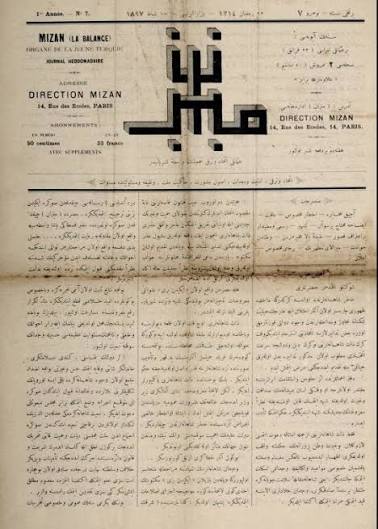
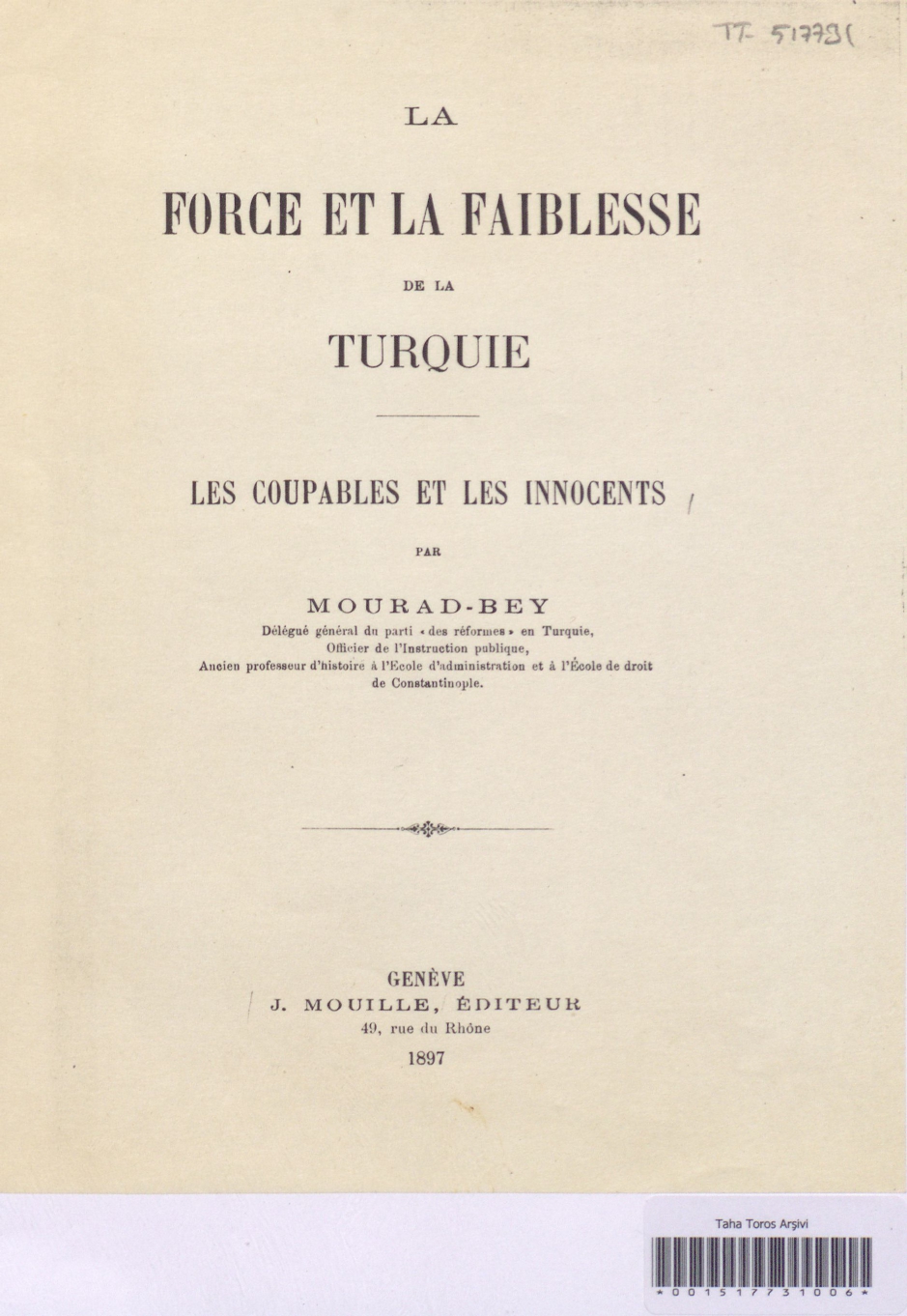
Across the dissertation, Mehmed Murad's life brings into view a world larger than himself. The long nineteenth century was an age when an older order was shed, and another worked its way into being. Empires were being remade from within and pressed from without, as colonial expansion redrew the map of the world while nationalisms and revolutions unsettled the multi-ethnic and multi-confessional order. As older forms of authority receded, institutions, sciences, and technologies reshaped how people lived and thought. The press created publics, railways and the telegraph drew distant places together, schools and academies produced a learned class, and populations moved across borders that were themselves being redrawn. The very terms through which people understood belonging, knowledge, and power were shifting under their feet. Out of these transformations a figure like Mehmed Murad became possible, formed at the crossings of empire, migration, and education. His life gathers these currents into a single case, where center meets periphery, displacement meets belonging, reform meets tradition, and loyalty meets dissent.